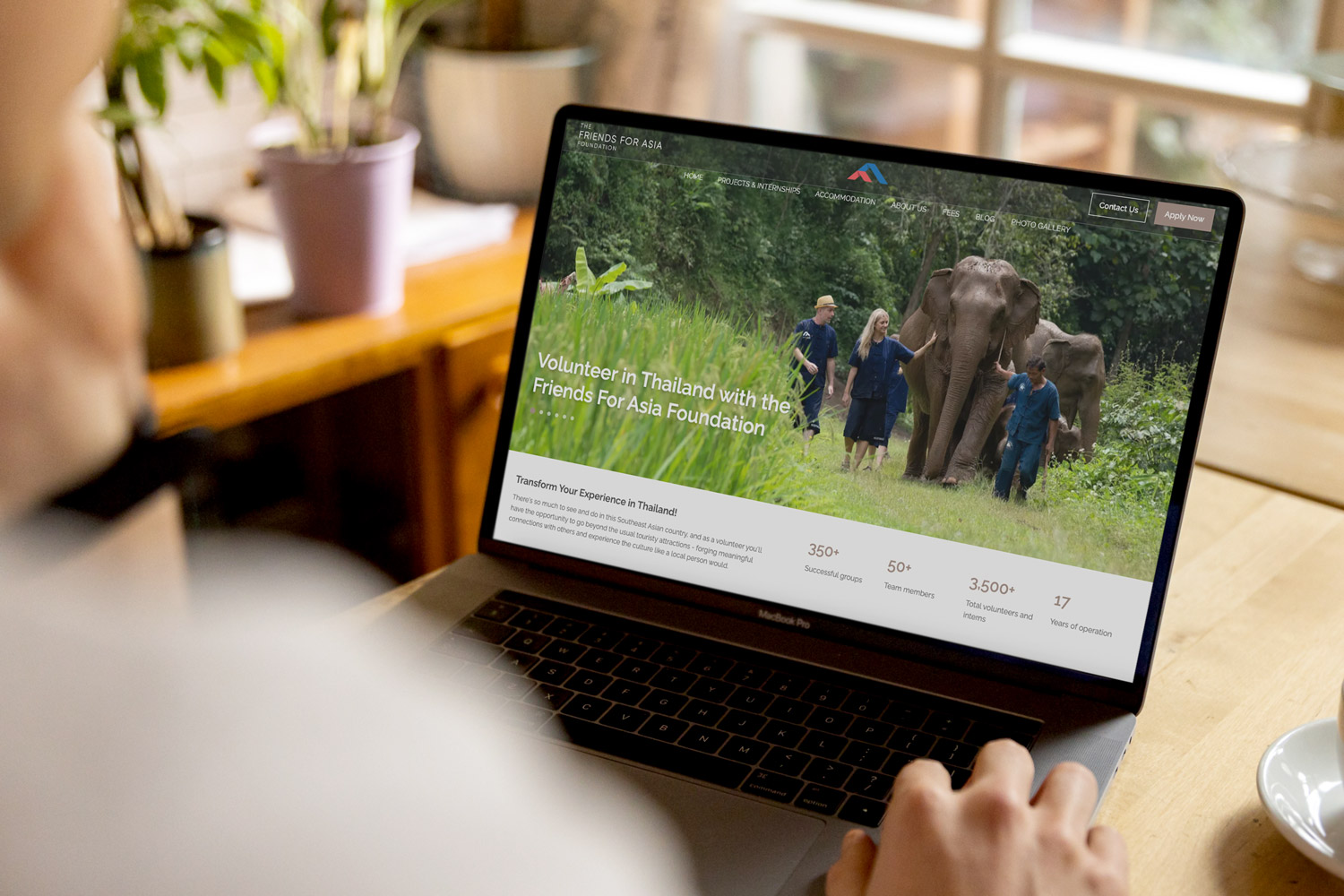
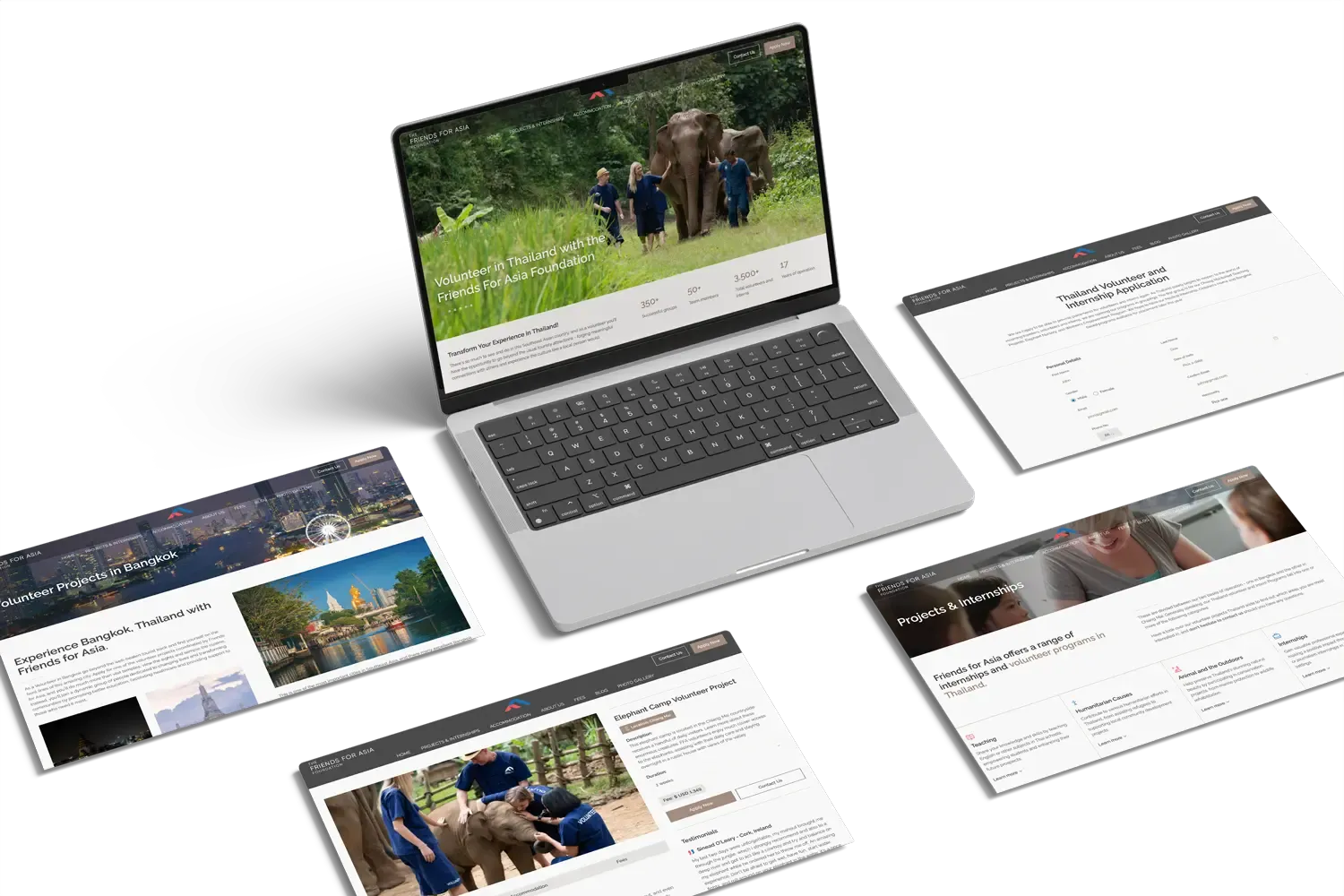
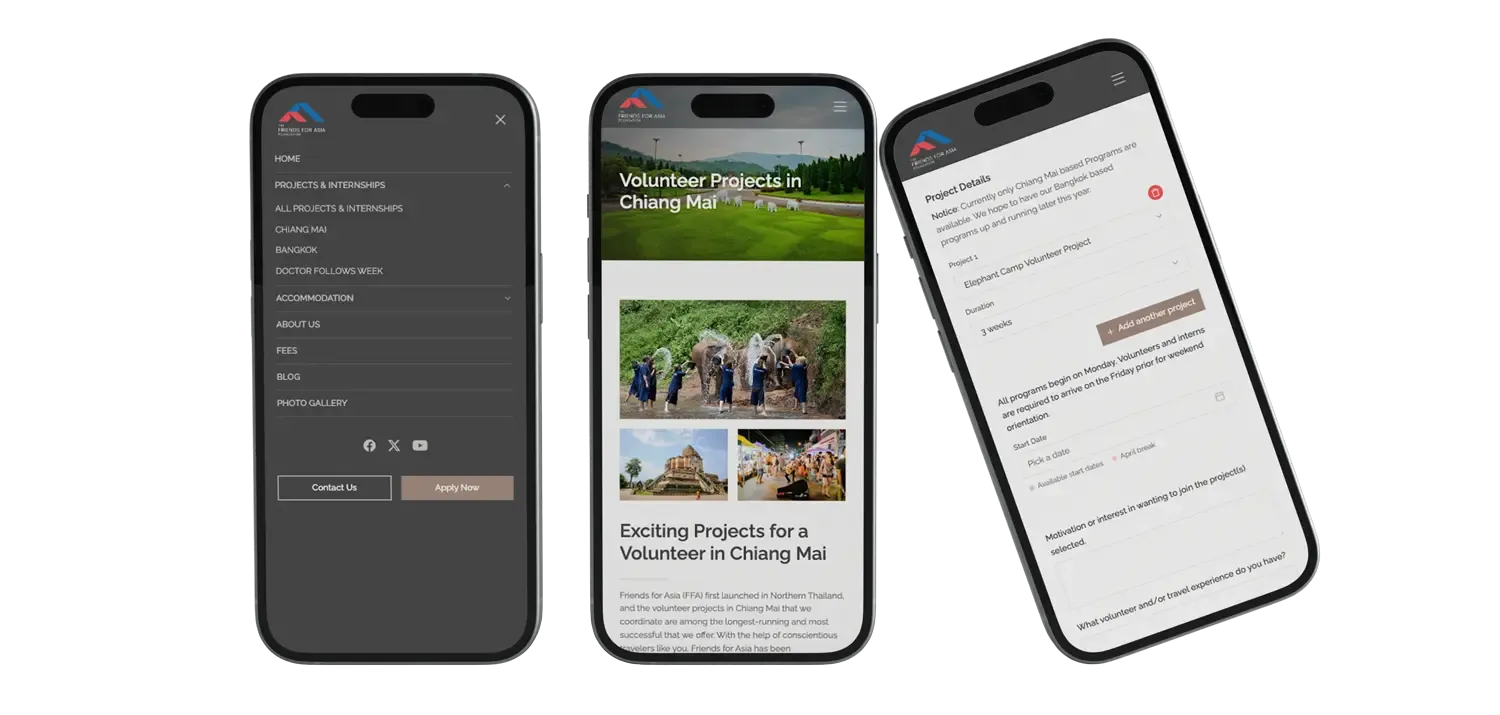
Friends for Asia connects people from around the world with volunteer and internship projects in Thailand, from bases in Bangkok and Chiang Mai. After 17+ years and thousands of volunteers, the website and tech stack behind it had grown outdated and hard to manage. We rebuilt the Volunteer Thailand site from scratch on Next.js with a Directus custom CMS, migrated 12+ years of content, refreshed the brand, and tuned the whole thing for international volunteers looking for programs they can trust in Thailand.
Friends for Asia has placed volunteers across Thailand for 17+ years, from bases in Bangkok and Chiang Mai. The site carrying all that history was a decade-old WordPress install, and the rebuild had to respect what was already there:
The brand needed to catch up with the organisation. Friends for Asia now runs 350+ groups and has hosted 3,500+ volunteers and interns, with specialist student programs like Doctor Follows Week and Engineering Immersion Week. The site had to carry that scale and credibility while still feeling warm and human, and let people explore by project type, location, and who each program is for.
And the team needed off the plugin-heavy WordPress treadmill — onto a modern headless CMS that centralises every project and program, powers custom application and enquiry forms, and automates the repetitive parts (logging submissions, sending notifications) without overwhelming a small team.
We mapped every major section — projects and internships, student group programs, fees, FAQs, booking guides, orientation, even "what to do in Chiang Mai" — then rebuilt the structure in Directus around real entities: projects, locations, blogs, resources. Redirects and URLs were planned up front to carry the existing SEO across, and content was grouped by what people come for: "volunteer in Chiang Mai", "a medical program as a student", "fees and practical info".
The custom Directus backend gives Friends for Asia structured collections for projects, internships, fees, FAQs, resources and student programs, role-based access so people only touch their own areas, and a clean, non-technical interface. Application and enquiry forms feed straight into Google Sheets, with email notifications so no lead slips.
The frontend is Next.js — server-rendered and statically optimised for quick loads in Thailand and overseas, fully responsive so volunteers browse and apply from a phone, with clear cards and filters for finding projects in Chiang Mai versus Bangkok. We ran older photos through AI upscaling and optimisation to revive them, cut page weight, and keep the look consistent.
With years of equity to protect, we reworked headings, meta and internal linking around phrases like "volunteer in Thailand", "volunteer in Chiang Mai" and "student group programs in Thailand", and structured every project page to say plainly who it's for, where it is, and what you'll do — better for readers and for search at once. The trust signals (years running, volunteer numbers, program types) are visible across the site now.
Friends for Asia now runs on a fast Next.js site with a Directus CMS instead of legacy WordPress — one place to manage every project, program, fee and FAQ, with forms that feed Google Sheets and email automatically and take the manual admin off the team's plate.
The site finally reflects the organisation as it is today: 17+ years, 3,500+ volunteers and interns, 350+ groups, told with revived photography from Chiang Mai, Bangkok and the project sites, and clear paths for long-term volunteers, gap-year travellers, and student groups.
For volunteers, it's simply easier — find the right project, compare options, see what a placement looks like, and apply in fewer clicks. It's a good example of how we help long-running Thai organisations move off outdated CMS setups onto custom platforms.