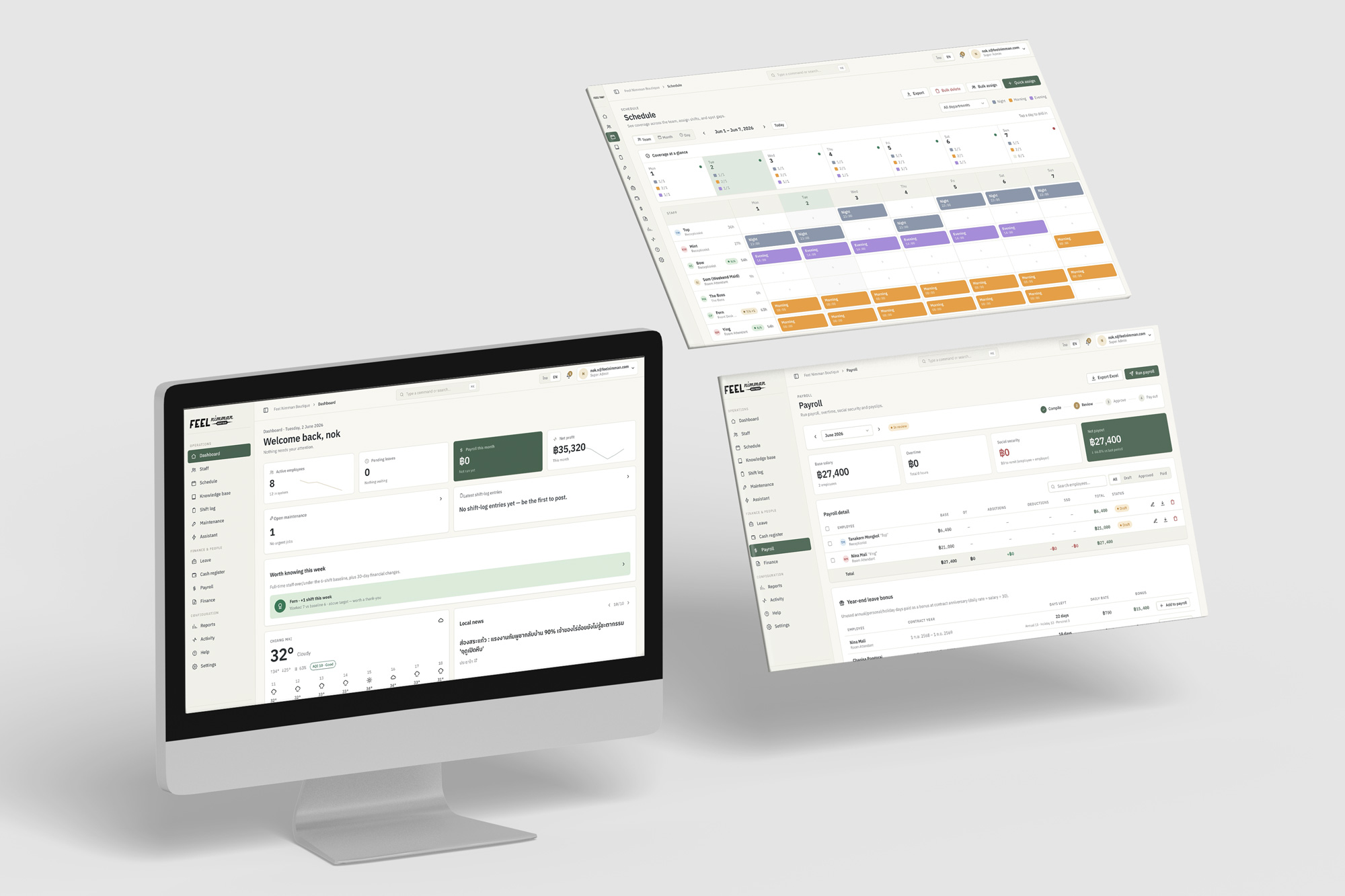
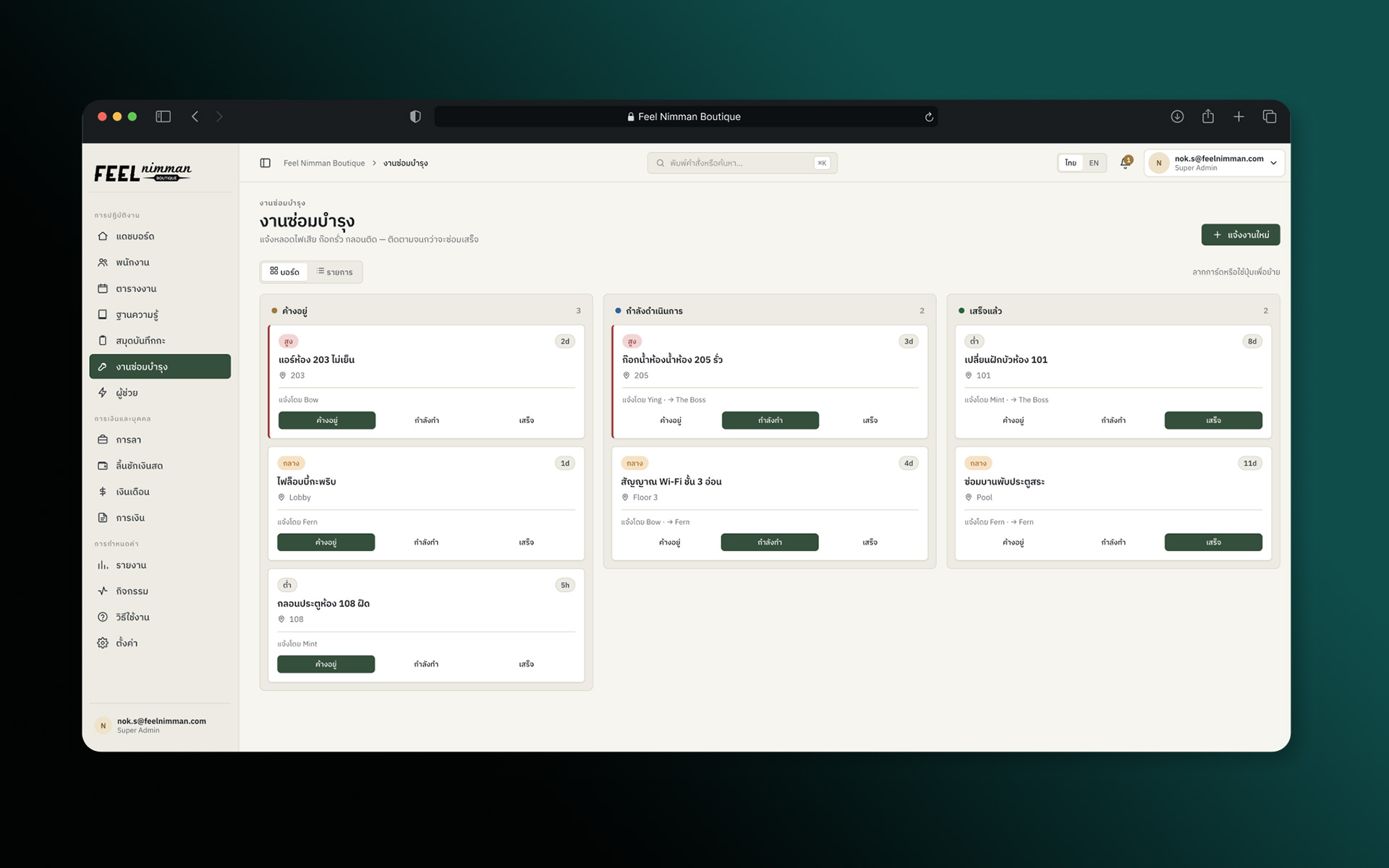
Feel Nimman is a 10-person boutique hotel in Chiang Mai. We built its ERP inside the hotel, one module at a time, each one answering a problem the owner had that week: shift swaps going missing, payroll figures nobody trusted, a petty-cash drawer that never balanced.
The hotel ran on Excel for shifts, paper forms for leave, and a physical logbook on the front desk. Hospitality staff come and go, so every new hire meant a manager re-explaining the same things — and the answers walked out the door when people did.
Most guests were international, which turned every email into a translation job. The hotel systems on the market were built for much larger properties, and the alternative was more spreadsheets and LINE threads.
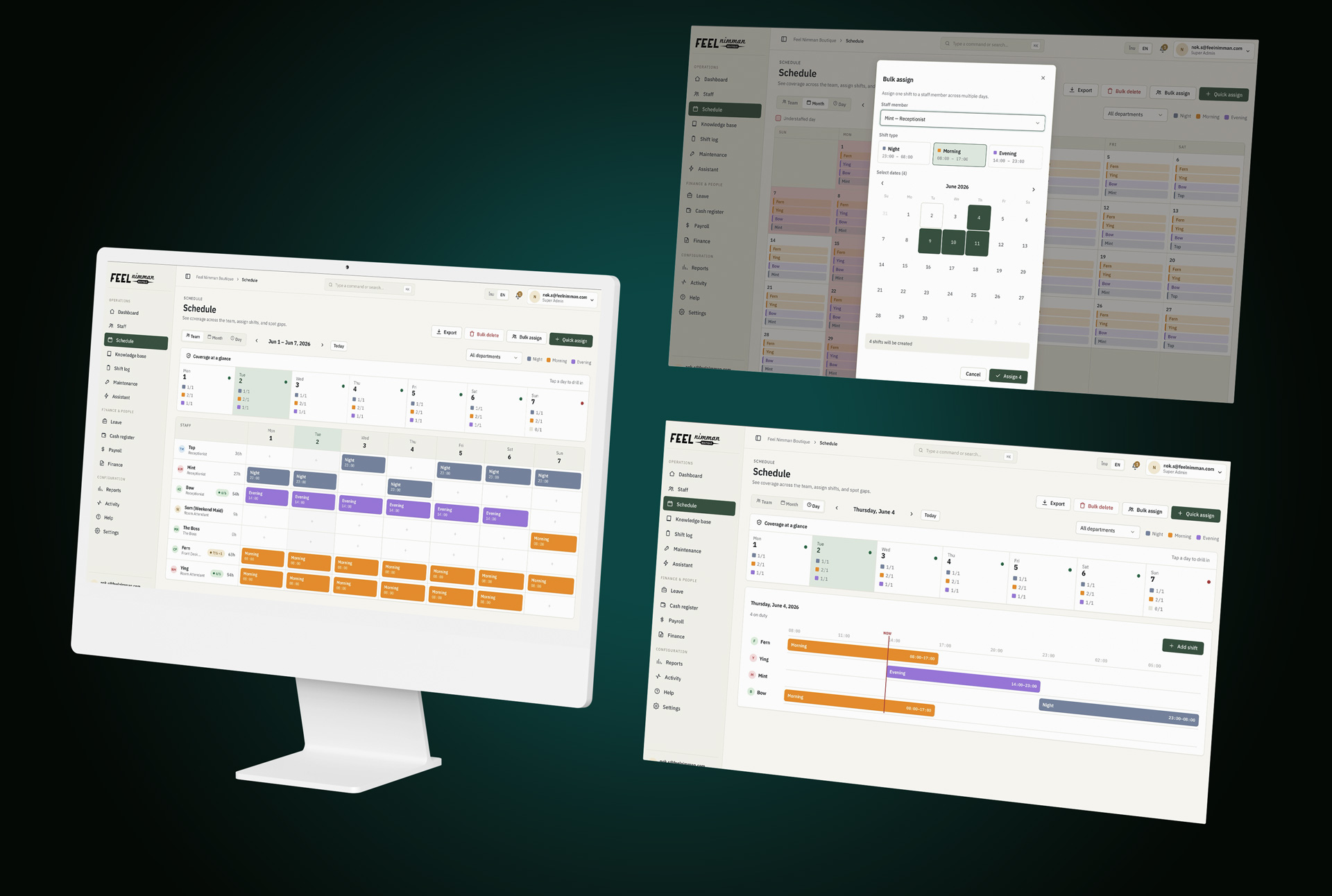
We didn't begin with a data model. We began with the shift board — scheduling that blocks a leave conflict as you make it, instead of surfacing it after two people have already booked the same day off.
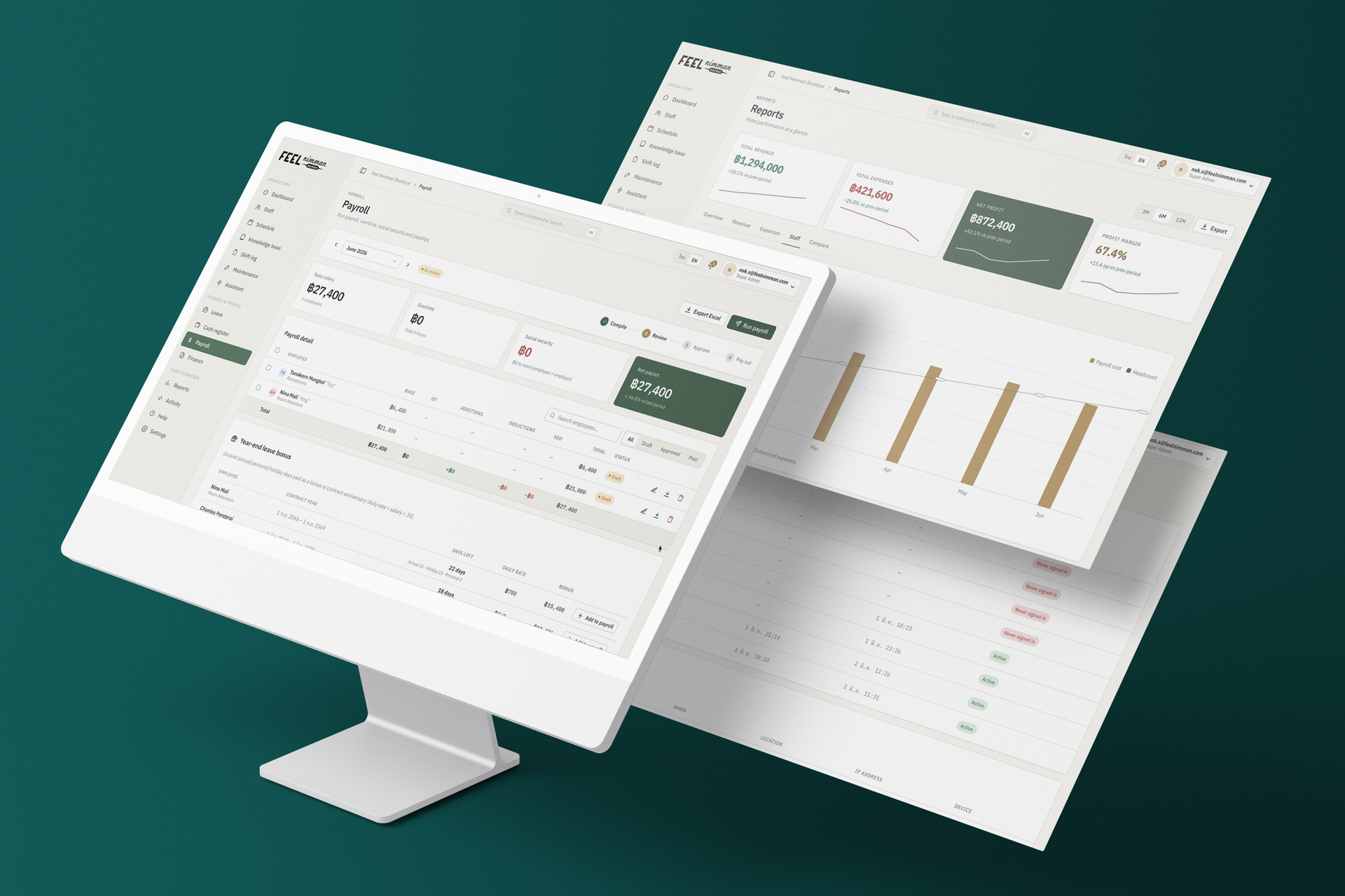
Thai payroll with social security and the year-end leave bonus calculated in the system instead of by hand on a calculator, so staff and the owner see the same figures on payday.
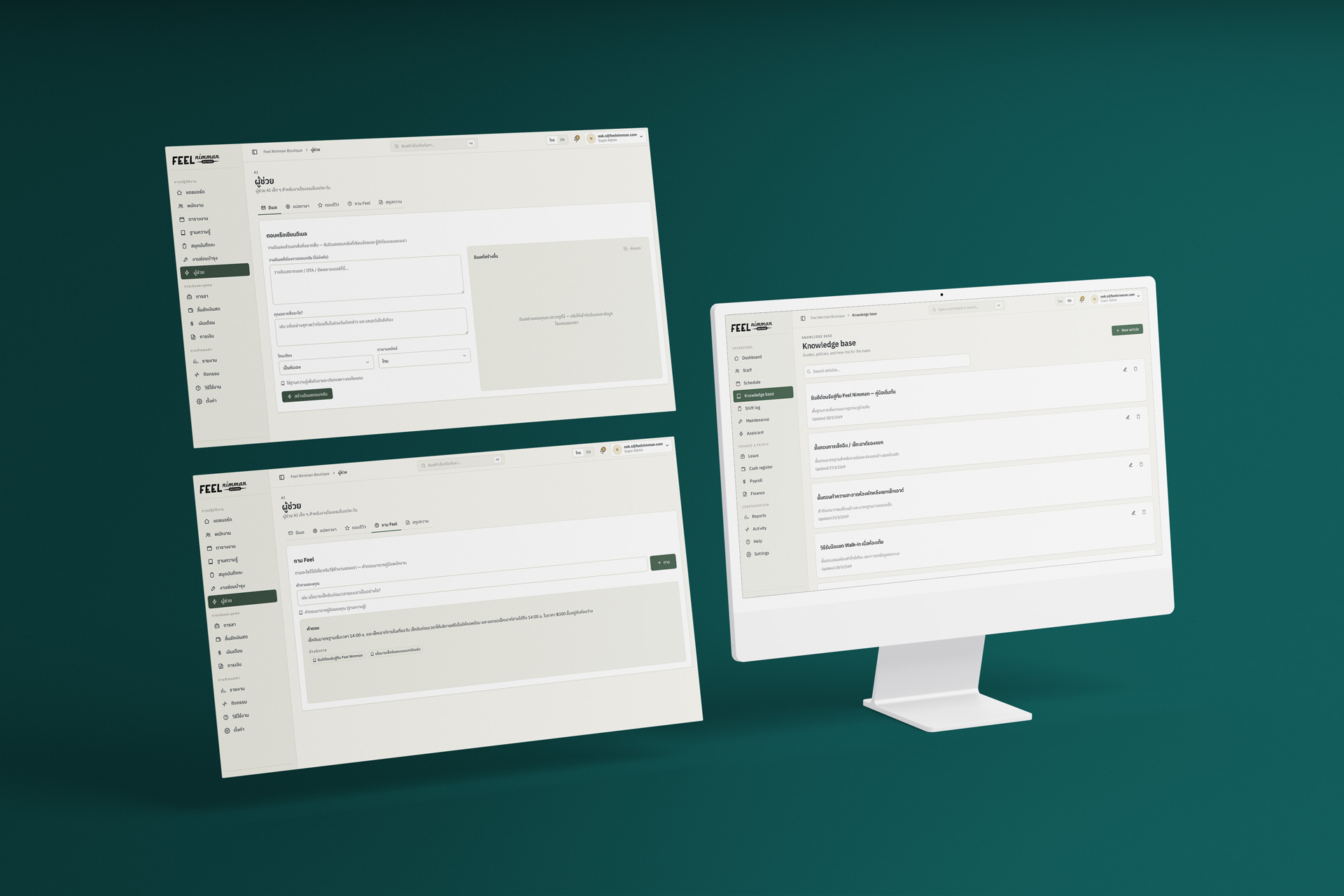
We replaced the paper logbook with a knowledge base staff can search in Thai or English, plus an AI chat that answers from it. A new hire asks a question and gets the answer the hotel wrote down, so training a rotating team stopped depending on who happened to be in that day.
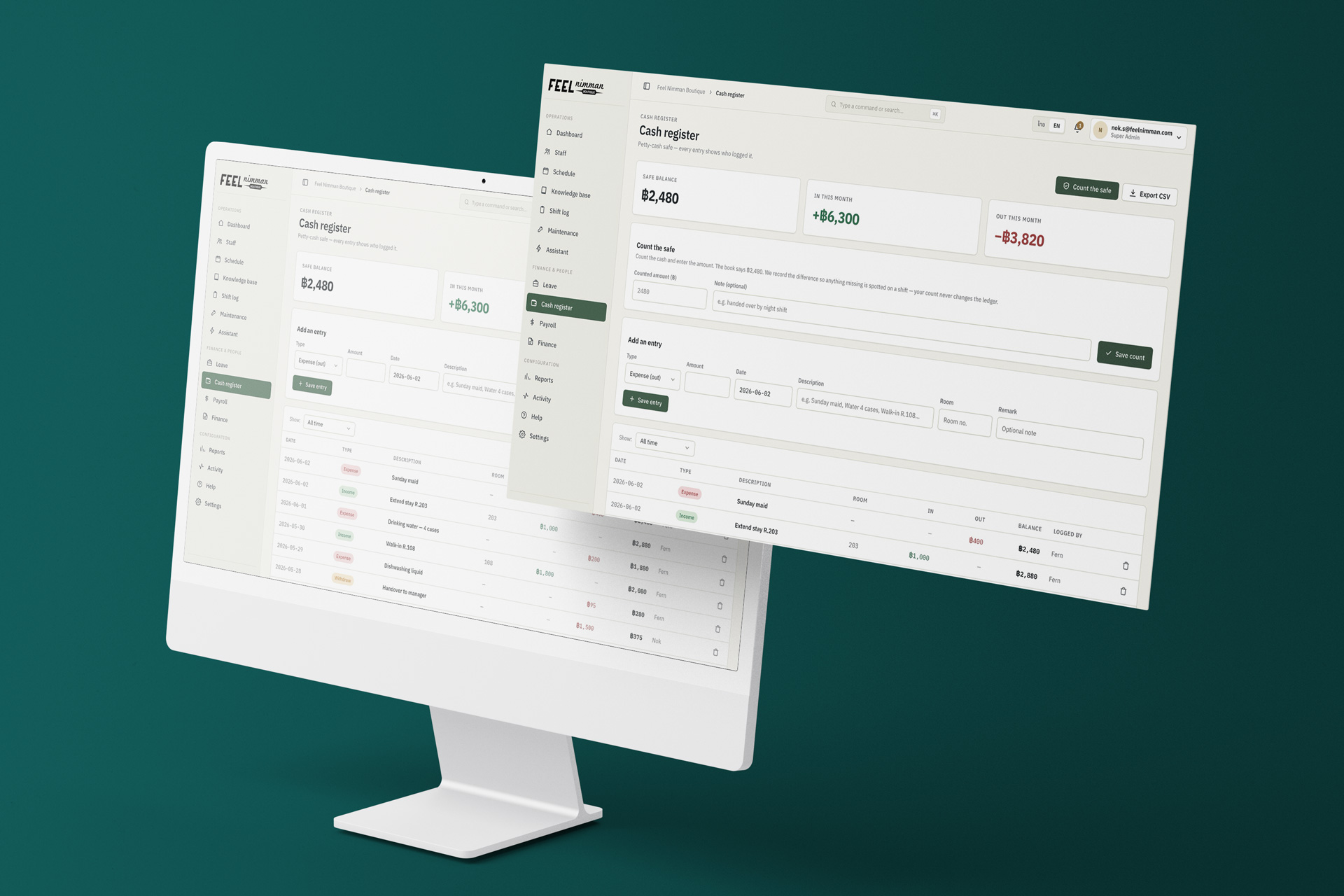
Every staff member logs in to count the safe or record a transaction. Counting the cash never touches the ledger — the register just tells you, loudly, when a shift comes up short. For the owner it rolls up into income, expenses and detailed reports: the whole business from above.
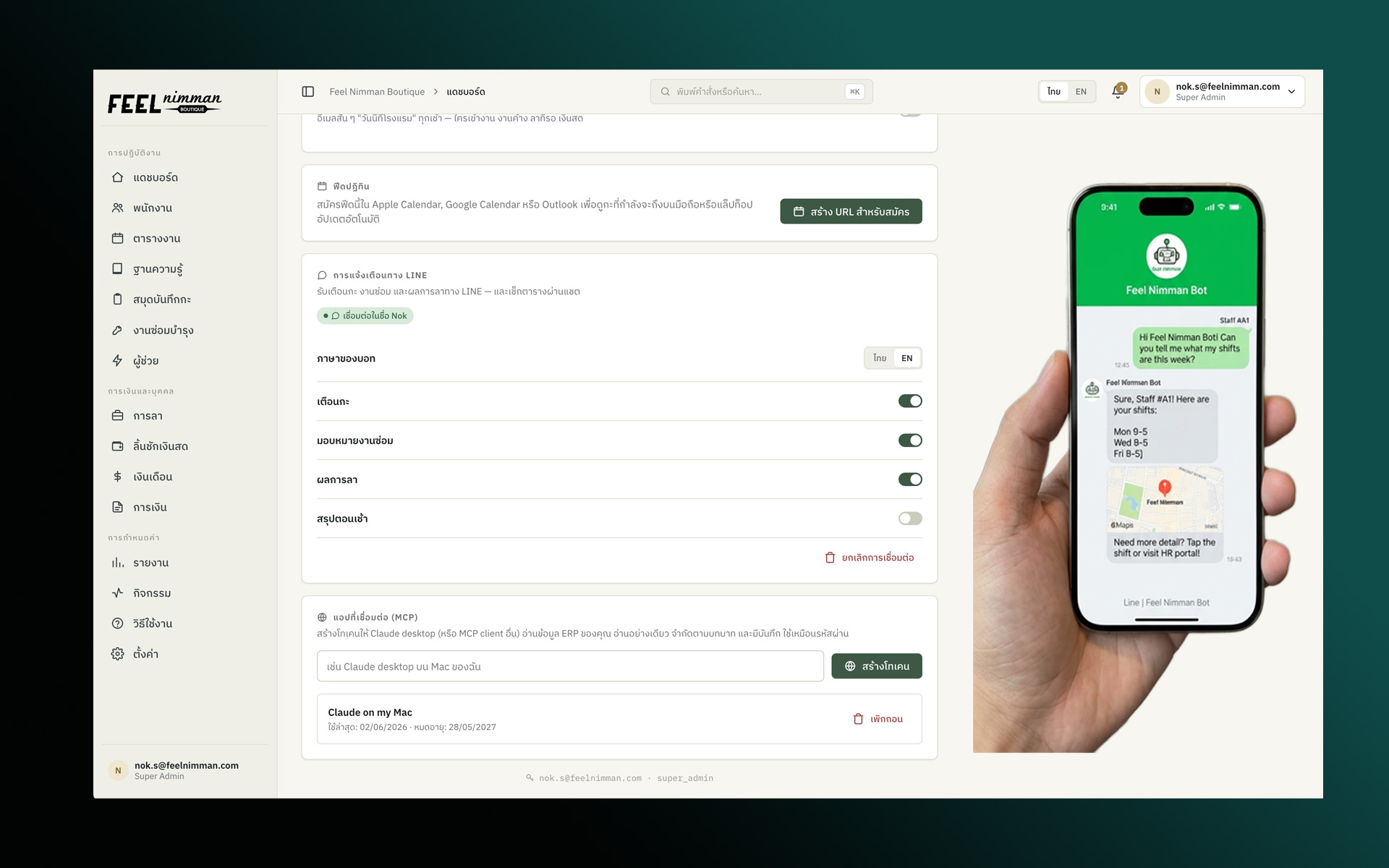
Shift reminders and leave requests happen through a LINE bot in Thai, because that's where the team already is — not inside a web app they have to remember to open.
We wired the app to Claude for the parts worth automating, and left the rest alone:
The spreadsheets are gone, the paper leave forms are gone, and the front-desk logbook is now a system anyone can search. Leave conflicts get caught before they happen. Payroll is a number people trust instead of one they argue about.
New staff get answers from the knowledge base instead of interrupting a manager, and international guest email stopped being a bottleneck. The owner sees the whole operation — understaffed shifts, tickets going stale, a shift that came up short — in one glance, and can ask Claude to pull or analyse anything else.
It runs as an installed desktop app on Mac and Windows and as a PWA on phones, self-hosted on Next.js and Neon Postgres. The hotel has used it every day since it went live.
“Since we started using the system, I finally see a clear picture of my finances — and the staff have never been happier. They do less, with almost no mistakes, which frees up time to work on other parts of the business.”